

Our History
Over 100 Years of Culture, Community & the Italian Spirit in Calgary
The story of the Calgary Italian Cultural Centre is the story of Calgary itself — built by immigrants who arrived with little, worked with everything they had, and created something that has lasted generations. From a small lodge meeting in people's homes in 1918 to a thriving cultural hub at the heart of the city, the CICC has weathered depressions, wars, fires, and a global pandemic. What has never wavered is the community's commitment to preserving Italian heritage and welcoming all who share that love. This is our story.
Our mission
"The objective of the Calgary Italian Cultural Centre is to preserve our Italian Culture and Heritage. The Centre is the meeting place for all that is Italian." — Raymond Blasetti, Past President
The families who built this community risked everything for a better life — and gave back more than they ever took. Their legacy lives on in every bocce game, every dinner at La Cantina, every scholarship awarded, and every new member who walks through our doors. We invite you to be part of the next chapter.
Our Story in Chapters
Over a century of history deserves more than a summary — it deserves to be told properly. Below you'll find our story organized into four chapters, each representing a defining era in the life of this community. From the struggles of the earliest Italian settlers to the vibrant cultural hub we are today, every chapter is a testament to what people can build when they come together with purpose, pride, and a shared love of their heritage.

Chapter 1 — The Beginnings (1910s–1940s)
The first Italians arrived in Calgary around 1910, drawn by railroad work and the city's booming economy. They settled in Bridgeland, formed tight-knit communities, and eventually founded the Loggia Giovanni Caboto in 1918 — a lodge built on cooperation, mutual aid, and the preservation of Italian identity. The Great Depression thinned their ranks and World War II brought discrimination, internment, and heartbreak. Italian-Canadians were labelled enemy aliens. Many hid their heritage. The lodge struggled and eventually lost its hall. But the community endured.
Chapter 2 — New Roots (1950s–1960s)
With the war over and a new oil boom underway, Italians returned to Calgary with renewed hope. In 1952 a small but visionary group — a sheet metal worker, a barber, a janitor, a carpenter — officially incorporated the Italo-Canadian Society of Calgary. By 1955 the two competing Italian groups had united under one name: the Calgary Italian Club. In 1959 they purchased a barn at 416 1st Ave NE for $17,000. That barn became the heart of Calgary's Italian community. When the government came for their wine in 1964, the Club rallied 500 people, hired a lawyer, and changed the law.

Chapter 3 — A Community Grows (1970s–1980s)
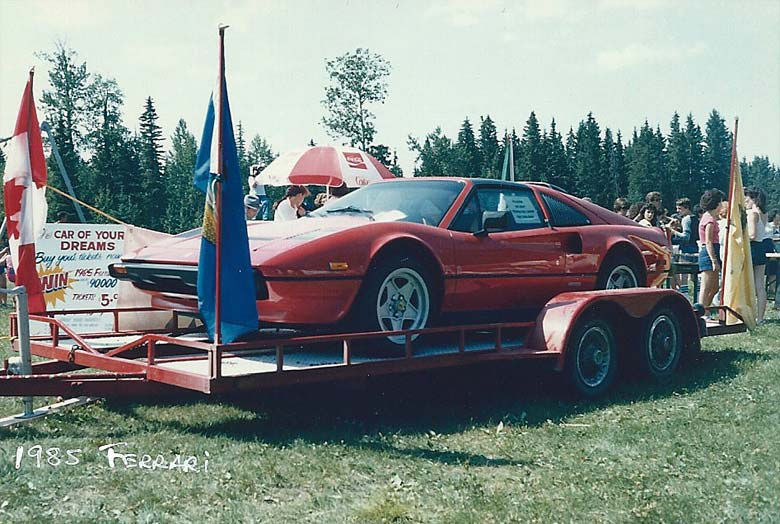
Through the 70s and 80s the Club expanded in every direction — launching the Italian School, the Columbus Savings and Credit Union, the Juventus Soccer Club, and the beloved Sportsman's Dinner. Fire destroyed the building in 1976. They rebuilt it in a year. When debt threatened to close the doors in the early 80s, members organized bingos, casinos, and the legendary Ferrari Raffles — raising nearly $1 million for charity and paying off the mortgage by 1986. Through every crisis, the community showed up.
Chapter 4 — The Centre Today (2010–Present)
In 2010, members voted to rename the Calgary Italian Club to the Calgary Italian Cultural Centre — a reflection of who they had always been: open to all, rooted in culture, and committed to the broader Calgary community. Today, the CICC is home to approximately just under 600 active members, with total community participation exceeding 1,200 when including family members. The Centre hosts vibrant bocce leagues, an accredited Italian school from Kindergarten to Grade 12, La Cantina restaurant, a thriving events calendar, and Sorelle Catering as culinary partners. Seventy years on, the Centre remains exactly what its founders envisioned — a gathering place for all that is Italian.

Did you know?
The CICC started in 1918 as a small lodge meeting in people's homes — members paid $1.00 a month in dues to support each other through illness and death.
In 1959, the community purchased a barn at 416 1st Ave NE for $17,000. That same address is still home to the CICC today.
In 1964, the RCMP raided 17 Italian families and confiscated their homemade wine. The Calgary Italian Club fought back — and by 1967 had successfully changed Alberta law to allow families to make wine at home.
In 1976, fire destroyed the original building. The community regrouped and rebuilt — reopening on the same site just one year later.
The famous Ferrari Raffles raised close to $1 million for Calgary charities while also helping the Club pay off its mortgage.
After a devastating earthquake near Avellino in 1980, the Calgary Italian community raised over $1 million in disaster relief — right here at the Centre.
In 1988, the CICC served as Casa Italia for the Italian Olympic Association during the Calgary Winter Olympics — giving birth to the Calgary Italian Folk Dancers who still perform today.
The CICC is open to everyone — you don't need to be Italian to join, attend events, or enroll in the Italian school. You just need to love all things Italian.